
Canadian County District Court Overview
Oklahoma runs its trial-level justice through district courts. There is one in each of the state's 77 counties, and the Canadian County District Court serves this county from El Reno. As a court of general jurisdiction, it can hear nearly every kind of case that begins at the local level. That list covers civil suits, felony and misdemeanor crimes, family and divorce cases, probate, juvenile matters, small claims, and traffic. The Oklahoma district courts page notes that district judges hear both civil and criminal matters, so a single court complex handles a wide mix of work each day.
Because the court has such broad reach, most county court records run through it and the elected Court Clerk. There is no separate county court at law here, and no stand-alone probate court. Civil disputes, criminal prosecutions brought by the State of Oklahoma, divorces, estates, and guardianships all land on the District Court's dockets. When a case needs review by a higher court, it leaves the county and moves into Oklahoma's appellate system.
Oklahoma Court Hierarchy and Appeals
The state court system has a clear shape. Two courts of last resort sit at the top, one for civil cases and one for criminal cases. Below them is an intermediate civil appeals court, then the district courts, and last the city-level municipal courts. The Canadian County District Court sits in the trial tier, where cases start and most records are first made.
- Oklahoma Supreme Court: court of last resort for civil appeals, with broad supervisory power over the whole court system.
- Oklahoma Court of Criminal Appeals: court of last resort for criminal appeals.
- Oklahoma Court of Civil Appeals: intermediate court that handles civil matters assigned by the Supreme Court.
- District Courts: general-jurisdiction trial courts in all 77 counties, including Canadian County.
- Municipal Courts: city courts for ordinance violations, city traffic, and municipal warrants.
Civil appeals from the Canadian County District Court go to the Oklahoma Supreme Court. Criminal appeals go to the Court of Criminal Appeals. The split is unusual among states, but it is set in the state constitution. The Oklahoma State Courts Network lists the courts and links each level of the system.
Note: Oklahoma keeps two separate courts of last resort, so the type of case decides whether an appeal goes to the Supreme Court or the Court of Criminal Appeals.
Canadian County Judges and Courtrooms
The court sits in the Canadian County Judicial Building at 301 N Choctaw Avenue in El Reno. Two district judges, one associate district judge, and several special judges share the docket load. The county staff directory lists the Judicial Building line as (405) 295-6160, with direct numbers for each judge. The table below pulls the court and judge contacts from official county sources so a visitor can reach the right office before a hearing.
| Court / Officer | Role | Address | Phone |
|---|---|---|---|
| Canadian County District Court (Judicial Building) | Main trial court facility | 301 N Choctaw Ave, El Reno, OK 73036 | (405) 295-6160 |
| District Judge Paul Hesse | District judge | Judicial Building, El Reno | (405) 295-6203 |
| District Judge Khristan Strubhar | District judge | Judicial Building, El Reno | (405) 295-6208 |
| Associate District Judge Bob Hughey | Associate district judge | Canadian County, El Reno | (405) 264-5530 |
| Special Judge Charles Gass | Special judge | Judicial Building, El Reno | (405) 295-6049 |
| Special Judge Barbara Hatfield | Special judge | Judicial Building, El Reno | (405) 295-6211 |
| Special Judge David Halley | Special judge | Judicial Building, El Reno | (405) 295-6221 |
| Special Judge Erin Jones-Slatev | Special judge | Judicial Building, El Reno | Confirm line with Court Clerk |
District judges handle the heaviest felony, civil, and family cases. Associate and special judges take on a wide range of dockets, from small claims and traffic to probate, juvenile, and treatment-court work. Phone lines and courtroom assignments can change, so callers should verify the room and judge with the Court Clerk before a court date.
District Court vs Municipal Court
People often mix up the District Court with the city courts in El Reno, Yukon, and Mustang. They are not the same, and the gap matters when you search for a record. The District Court is a court of record with broad power. A municipal court is a city court limited to local ordinance matters. The comparison below shows where each one fits.
| District Court | Municipal Court | |
|---|---|---|
| Court level | General-jurisdiction trial court | City court for ordinance matters |
| Cases heard | Felonies, state misdemeanors, civil, family, probate, juvenile, small claims, traffic | City-code violations, city traffic, municipal warrants |
| Record of proceedings | Court of record | Sometimes a court not of record |
| Where records live | Court Clerk, OSCN, ODCR | City court clerk and city payment portal |
| Appeals go to | Supreme Court or Court of Criminal Appeals | Generally the District Court |
The boundary line is the type of offense. A city-code ticket stays in municipal court. A felony or a non-code misdemeanor committed inside a city is prosecuted in the Canadian County District Court instead. That is why a missing ticket may sit in a city portal while a serious charge from the same town shows up on the District Court docket.
Canadian County District Court Dockets
State law sorts district court cases into set dockets. The Title 20 statutes name docket groups such as civil, criminal, traffic, probate, juvenile and family, small claims, and business. The Canadian County Court Clerk mirrors that structure, with department pages for each major case type. Each docket produces its own kind of file and its own case-number prefix.
- Civil: lawsuits, judgments, garnishments, court-ordered titles, and liens.
- Criminal: felony and misdemeanor cases filed by the State through the District Attorney.
- Traffic: state and county citations placed in District Court.
- Probate: estates, wills, and judicial determinations of death.
- Juvenile and family: divorce, child support, and deprived or delinquent child cases.
- Small claims: money claims up to a set dollar limit, often filed without a lawyer.
- Business: commercial dockets set out under Title 20.
Case numbers carry a prefix that tells you the docket. Common ones include CF for felony, CM for misdemeanor, TR for traffic, CV for civil, SC for small claims, FD for family and divorce, PB for probate, and PO for protective orders. These files show up as Canadian County court dockets in the state online systems, where you can search by name or case number.
Probate and Guardianship Dockets
Probate is not a separate court in Canadian County. It is a docket of the District Court, handled through the Court Clerk's Probate Department. The Title 58 statutes give district courts probate jurisdiction over wills, estates, letters of administration, and guardianship matters. The county Probate Department page lists a filing fee of $207.89 for probate of an estate and $212.89 for a judicial determination of death. It also warns that Oklahoma is a non-form state, so the Court Clerk does not hand out probate forms.
Guardianship cases share the same court. The guardianship page sets the fee at $77 for a relative guardianship and $201.64 for a non-relative guardianship. One local rule stands out. A person cannot file a guardianship on their own child unless the other parent has died. Guardianship files can include petitions, background checks, medical reports, orders appointing a guardian, and annual reports, some of which carry restricted personal data.
Note: Because the clerk cannot supply probate or guardianship forms, self-represented filers must do their own legal research or hire counsel before filing.
Children's Justice Center and Juvenile Cases
Many of the court's juvenile and child-related matters connect to the Gary E. Miller Children's Justice Center at 7905 E Hwy 66 in El Reno. The county describes the center as a hub for assessment, prevention, education, probation, treatment, home-based services, independent living help, and detention. The District Attorney for District 4 also keeps a Children's Justice Center office there, which works deprived and delinquent child cases tied to the juvenile docket.
The county court materials also point to treatment-court work. Criminal forms include a drug-court plea summary, and one current special judge served for years as a juvenile-division referee over the family treatment court program. Specific program rules, eligibility, and graduation data were not published in official county pages, so anyone seeking a treatment-court spot should ask the Court Clerk, the District Attorney, or assigned counsel about referral.
Municipal Courts in Canadian County
Cities in the county run their own courts for local violations. The largest are in El Reno, Yukon, and Mustang. These courts handle city-code tickets, city traffic citations, and municipal bench warrants. The El Reno Municipal Court keeps citations, payments, dockets, and warrant records for the city. The Yukon court page states plainly that it is a court not of record.
The key point for a record search is venue. Yukon says that all felonies and misdemeanors committed in the city but outside the City Code parameters are prosecuted in the Canadian County District Court. So a serious charge moves up to the District Court, while a parking or code ticket stays in the city system. A citation that never appears in the District Court docket may simply be a municipal case held in a city payment portal.
How a Case Moves Through the System
A case follows a fairly set path from filing to any appeal. Criminal and civil cases travel different routes through the trial court, but both can end with review by a higher court. Each step adds entries to the file, so the docket grows as the case moves. Every stage creates new Canadian County court records that the Court Clerk keeps.
Criminal flow: Arrest › First Appearance › Information or Indictment › Arraignment › Pretrial › Trial › Sentencing › Appeal
Civil flow: Petition Filed › Answer › Discovery › Pretrial › Trial › Judgment › Appeal
Appeals path: Canadian County District Court › Court of Civil Appeals or Court of Criminal Appeals › Oklahoma Supreme Court
Most cases never reach an appeal. Many criminal cases end with a plea, and many civil cases settle before trial. When an appeal does happen, the route depends on the case type, since civil appeals and criminal appeals go to different high courts under Oklahoma law.
Canadian County Court Growth
Canadian County is one of the fastest-growing counties in central Oklahoma. U.S. Census figures put the 2020 count at 154,405 and a July 2024 estimate near 181,760, which reflects strong suburban growth around Yukon and Mustang. More residents means more filings, and that pressure reached the court system in 2025. The state legislature created a new special judge seat for the county, and a new judge filled it.
The Oklahoma Bar Journal reported the appointment of Erin Jones-Slatev as a new Canadian County special judge in late 2025, tied directly to population growth and rising case filings.
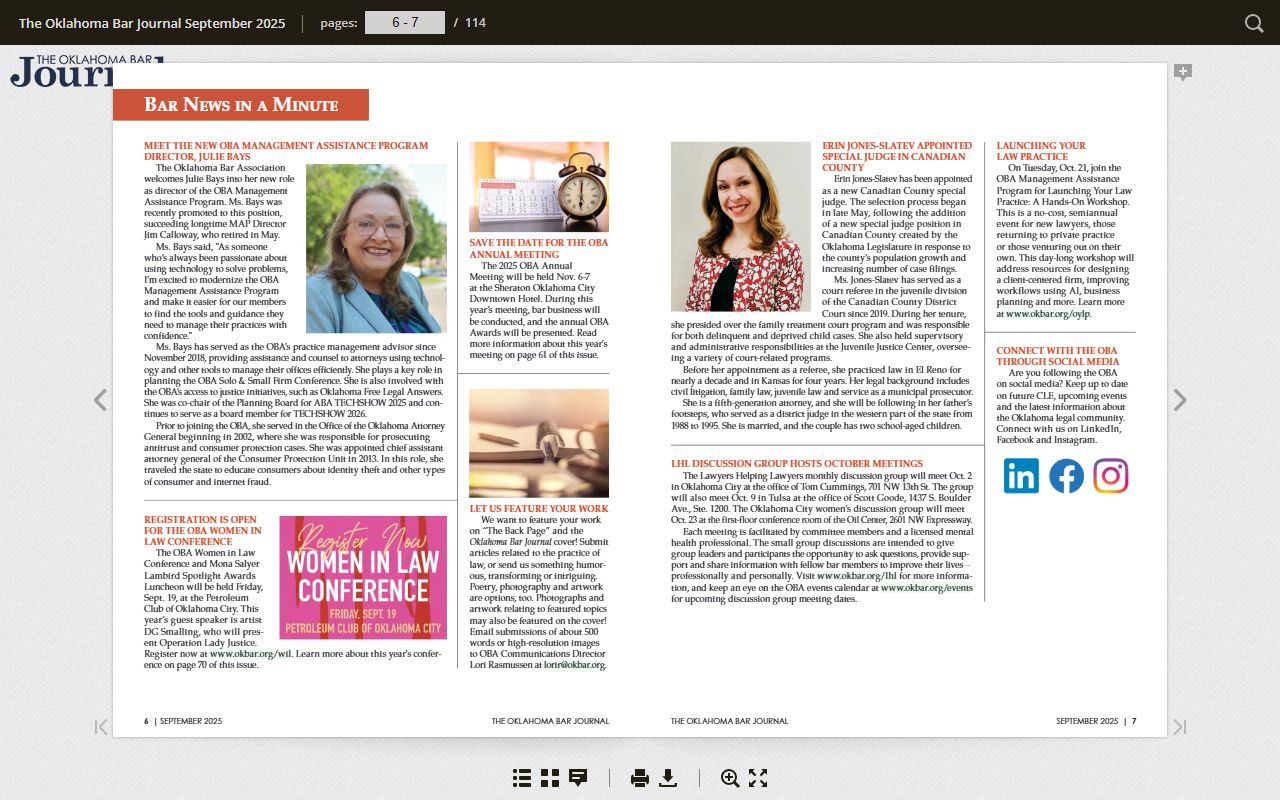
The new seat shows how court staffing follows the county's growth. As more people move in, the District Court takes on more civil, criminal, family, and juvenile work, and the bench expands to keep dockets moving.
Federal Courts for Canadian County
Some cases never touch the District Court at all. Federal crimes, federal civil suits, and bankruptcy filings go to the federal courts instead. Canadian County sits in the U.S. District Court for the Western District of Oklahoma, which is based in Oklahoma City. State felonies, divorces, probate, traffic, small claims, and county warrants stay in the Canadian County and Oklahoma systems unless a case is removed to or charged in federal court.
The federal district court posts its locations and contact details on its official site.
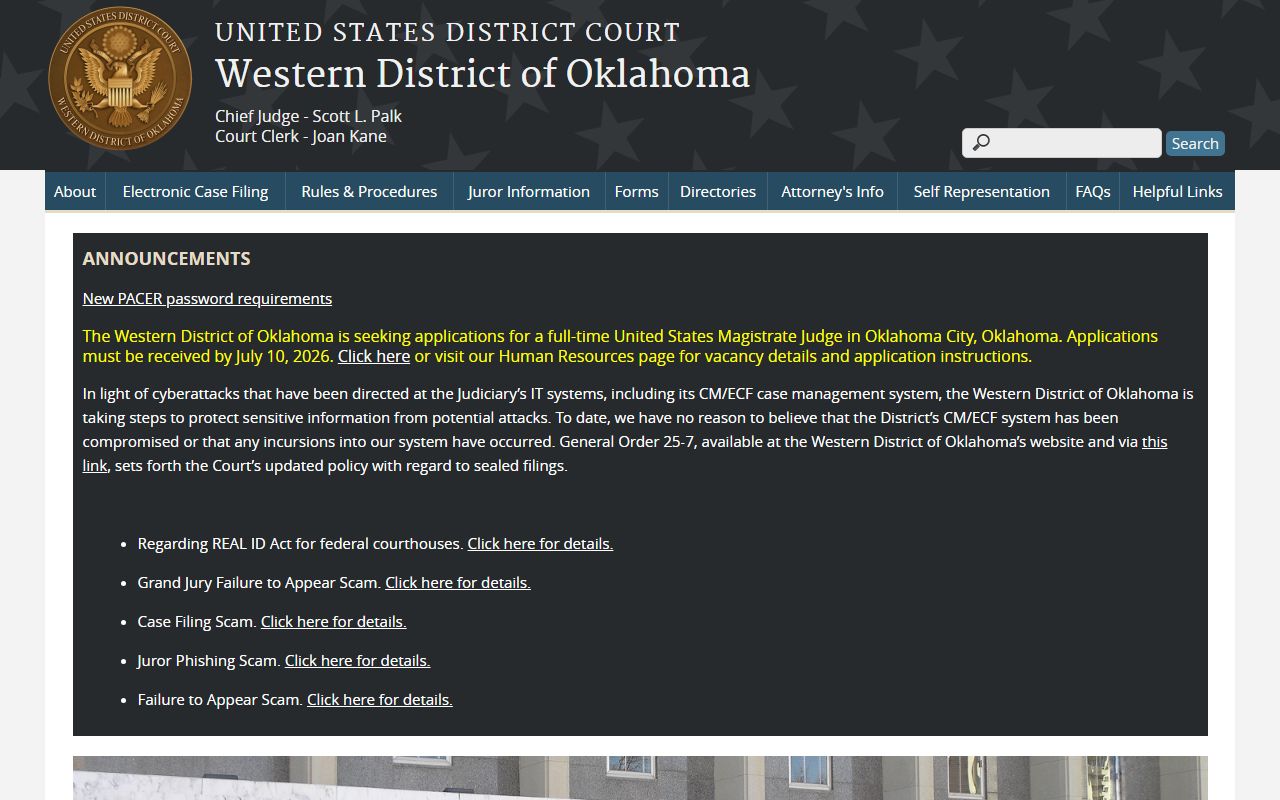
That court handles the federal civil and criminal docket for this region from its Oklahoma City courthouse. Federal case files are searched through PACER, not through the state court portals.
The PACER listing for the Western District of Oklahoma shows the district court's electronic filing details.
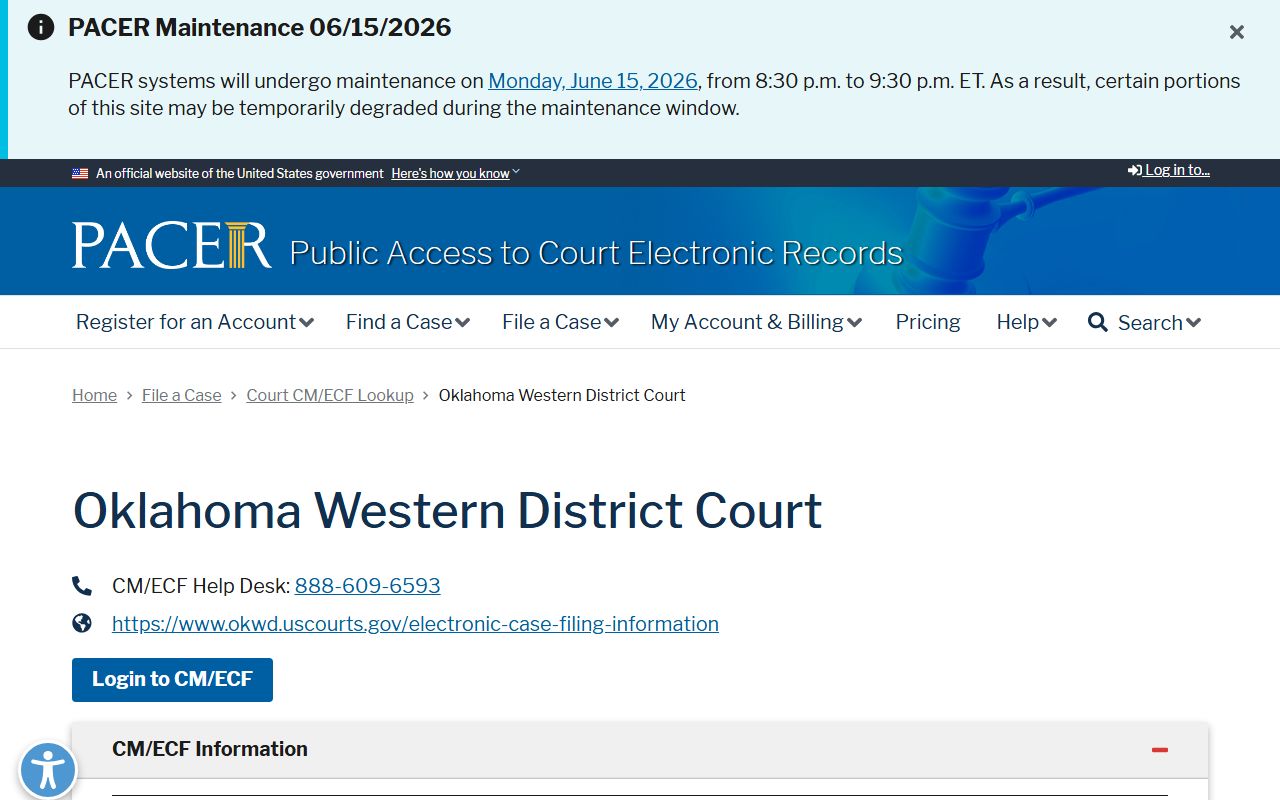
PACER is the public access system for federal court records, and it covers civil, criminal, and appellate dockets. Bankruptcy filings have their own court and their own PACER entry.
The separate PACER listing for the Western District bankruptcy court covers federal bankruptcy cases for the area.
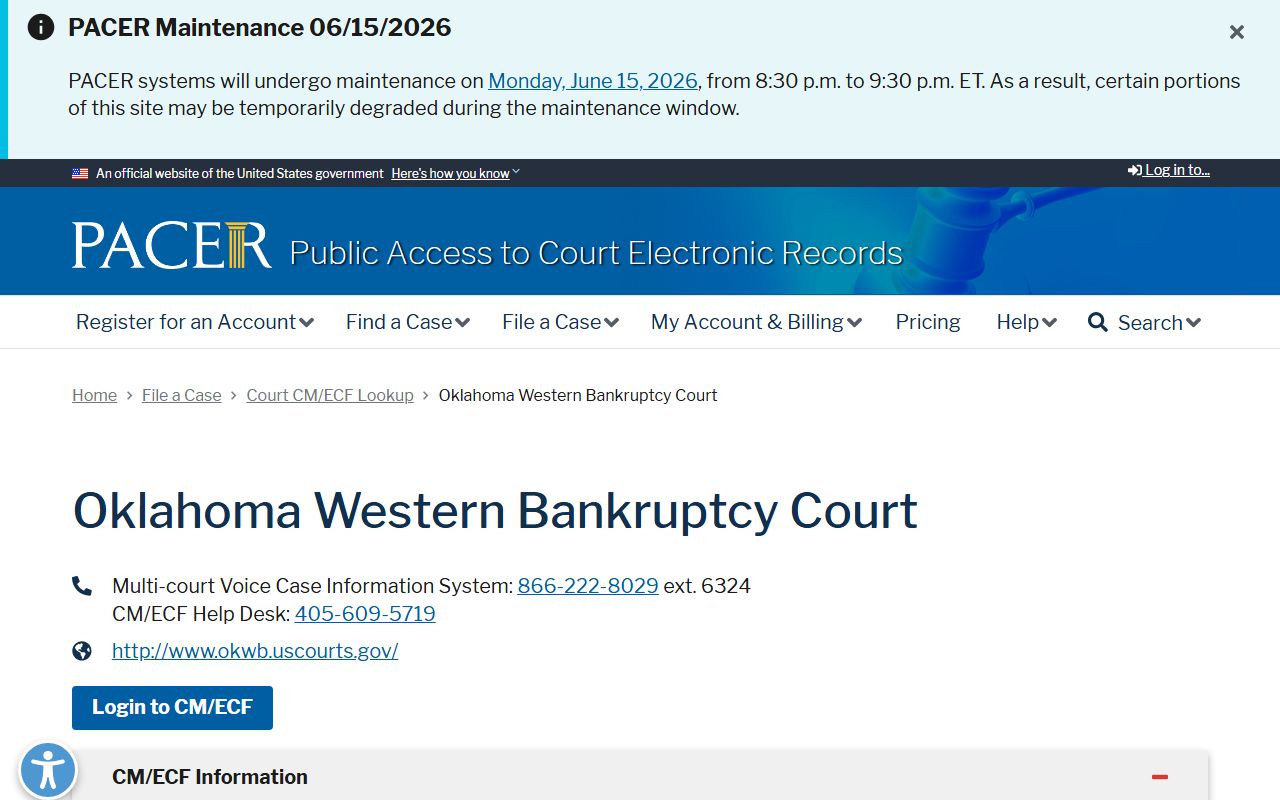
Bankruptcy is a federal matter, so those records never appear on the county District Court docket. Federal prosecutions in this region come through the U.S. Attorney's Office.
The U.S. Attorney's Office for the Western District of Oklahoma calls itself the largest of the state's three federal districts, covering 40 of Oklahoma's 77 counties.
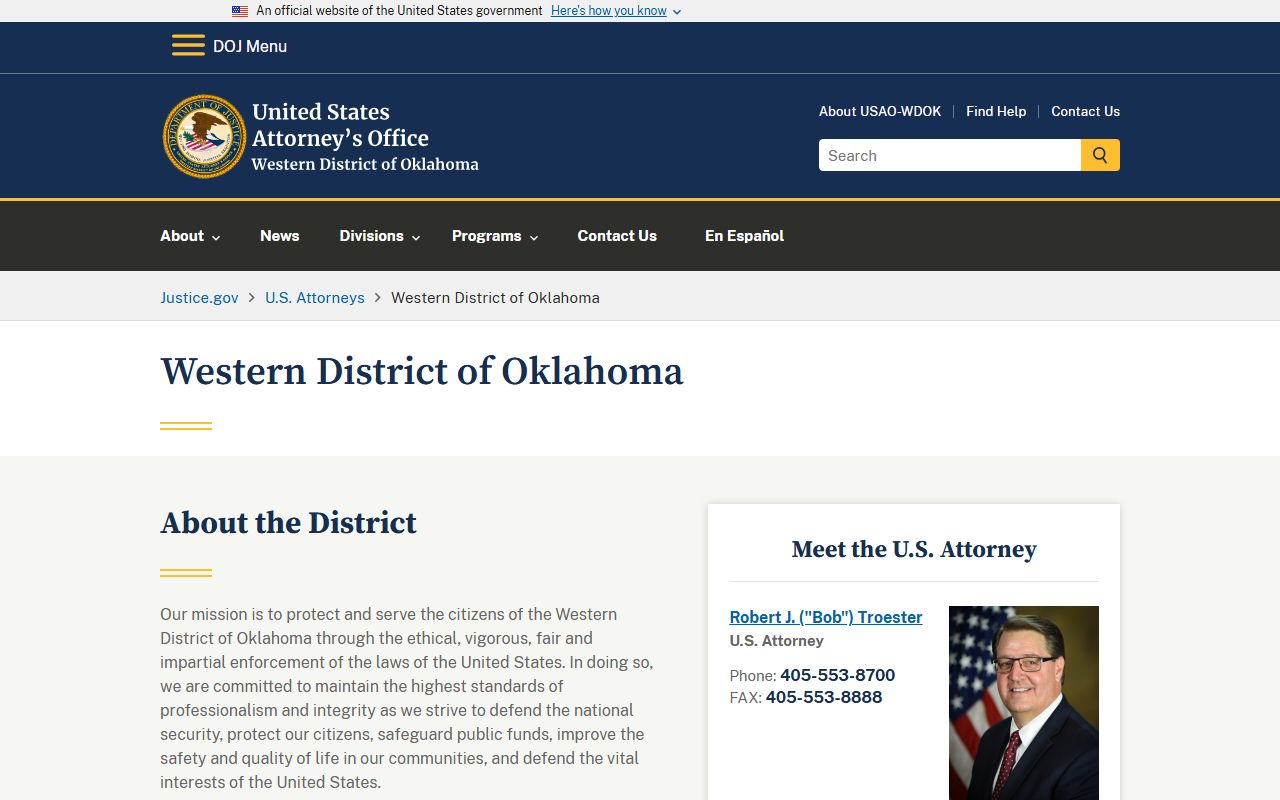
That office prosecutes federal crimes that arise in Canadian County and the rest of the district. For state-level court records, though, the Canadian County District Court and the Court Clerk remain the main starting point.